
If you are in Class 12 or taking a drop year to prepare for JEE Main 2027, this is the time to make every day of your preparation count. With the first session approaching, students need a focused strategy to strengthen their concepts, revise important topics, and improve their problem-solving speed.
Whether you have completed most of the syllabus or are still working on a few chapters, the right study plan can help you make better use of your remaining preparation time.
In this guide, we cover everything you need to know about JEE Main 2027, including the latest exam dates, exam pattern, syllabus, and a practical 60-day study plan to help you prepare more effectively for the upcoming examination.
What Is JEE Main 2027 and Who Needs It?
JEE Main is one of India’s biggest engineering entrance exams, conducted by the National Testing Agency (NTA) as a computer-based test. Your score does more than clear one exam. It opens the door to NITs, IIITs and other centrally funded technical institutes, and it also decides whether you can sit for JEE Advanced, the gateway to the IITs. JEE Main 2027 will be held twice, so a bad day does not have to end your year, because a second chance is built in. Below we look at who the exam is for and where your score will be used.
The Two Sessions of JEE Main 2027
JEE Main is held twice a year, in January and April. Session 1 is in January and Session 2 is in April. You can appear in both or only one. If you take both, your better performance is used to work out your rank, so Session 1 can also be treated as a first chance to improve. Even so, do not take it lightly. The first session shapes both your confidence and your plan for everything that follows.
Where a JEE Main Score Gets You Admission
Your JEE Main score lets you take part in JoSAA counselling for B.Tech seats at NITs, IIITs and GFTIs. Many state-level and private universities accept it as well. B.Arch and B.Planning use a separate paper. Your rank, branch preference and category together decide which seat you get, so clearing the exam is not enough. What you need is a good rank.
JEE Entrance 2027 and Its Link with JEE Advanced
To get into an IIT you first have to appear in JEE Main. The top-ranked candidates qualify to sit for JEE Advanced. In recent years that number has been around 2.5 lakh, but check the exact figure for this year on the official NTA and JEE Advanced notices. JEE Advanced can be attempted at most twice, in two consecutive years. So the first rung of the JEE Entrance 2027 ladder is JEE Main.
JEE Main 2027 Session 1 Exam Date and Important Dates
NTA published its exam calendar in September, and it placed JEE Main 2027 Session 1 between 22 and 30 January. On 26 October 2026 the calendar was revised, and Session 1 will now be held on 20, 21, 22, 23, 24 and 28 January 2027. Many websites still show the old dates, so trust only the latest ones. The dates below follow the NTA notice and the major education portals that reported it. Even so, match them once on jeemain.nta.nic.in before you plan anything around them.
| Event | Date |
|---|---|
| Session 1 registration opens | 24 October 2026 |
| Last date to apply and pay the fee | 22 November 2026, up to 11:50 PM |
| Exam city intimation slip | 30 December 2026 |
| Admit card | 13 January 2027 |
| Session 1 exam | 20, 21, 22, 23, 24 and 28 January 2027 |
| Session 1 result | February 2027 (expected) |
| Session 2 registration | 5 January to 3 February 2027 |
| Session 2 exam | 2 to 7 April 2027 |
JEE Main 2027 Exam Date: Session 1
On the JEE Main 2027 Exam Date, Session 1 runs for six days: 20 to 24 January and then 28 January. The revised calendar has dropped the 31 January buffer day. Your own exam day and shift will be printed on your admit card, so do not plan around a single date. Assume the exam can begin any time from 20 January.
The Registration Deadline Is Very Close
Today is 19 November and the last date to apply is 22 November, up to 11:50 PM. If you have not filled in the form yet, do not wait for the final day, because the website can slow down in the last hours. You will need your photo, signature, Class 10 and 12 details and the fee payment. Check the Information Bulletin for the fee and the full document list.
Session 2 Dates and How to Use Them
Session 2 will be held from 2 to 7 April 2027, and its registration runs from 5 January to 3 February. If Session 1 does not go as hoped, treat it as a chance to improve. Spend two weeks after Session 1 listing your weak chapters, and work on them until April. Balancing this with your board exams is the biggest challenge of that period.
JEE Main 2027 Exam Pattern and Marking Scheme
Preparing without knowing the pattern is like travelling without a map. From 2025, JEE Main Paper 1 (B.E./B.Tech) changed in a big way: earlier you could pick 75 questions out of 90, but now there are 75 questions in total and all of them are compulsory. The same structure is expected to continue in 2027, but please confirm it once against the NTA Information Bulletin. Below you will find the Paper 1 structure, the negative marking rules and the eligibility conditions in plain language.
| Subject | Number of questions | Marks |
|---|---|---|
| Physics | 25 | 100 |
| Chemistry | 25 | 100 |
| Mathematics | 25 | 100 |
| Total | 75 | 300 |
Structure of Paper 1
Paper 1 has 25 questions each from Physics, Chemistry and Mathematics, so 75 questions and 300 marks in all. Every subject has 20 multiple-choice questions in Section A and 5 numerical value questions in Section B, where the answer is a number you type in. The exam is three hours long and computer-based. That works out to about an hour per subject, but which subject you start with is a strategy call you need to make.
How Much Does Negative Marking Hurt?
A correct answer earns 4 marks, a wrong answer costs 1 mark, and an unattempted question scores zero. According to recent sources this rule applies to both multiple-choice and numerical questions. So guessing blindly is not always a good bet. Take a risk only when you can remove two options, otherwise leave the question and move on. This habit gets built only through mock tests during these 60 days.
Eligibility and Number of Attempts
There is no age limit for JEE Main. Students who passed Class 12 in 2025 or 2026, or who are appearing in 2027, can apply. A candidate can attempt the exam for up to three consecutive years, and since there are two sessions each year, that makes six attempts in total. For NITs and similar institutes there may be a separate Class 12 marks requirement, which you should check in the counselling rules.
JEE Main Syllabus 2027: Where to Focus in Each Subject
The JEE Main Syllabus is built on Class 11 and 12 Physics, Chemistry and Maths, and a large part of it overlaps with NCERT. Reports say there is no change in the Physics, Chemistry and Maths syllabus for 2027, so you are studying the same content as last year. The final list is on the NTA website, so print it once and keep it near your study table. Below are the parts of each subject that have often carried more questions in past years. This is an estimate based on paper trends, not a guarantee, so do not skip the rest of the syllabus.
Physics: Topics That Deserve Attention
In Physics, Mechanics (laws of motion, work and energy, rotation), Electrostatics, Current Electricity, Magnetism, Optics, Thermodynamics and Modern Physics are the areas that often bring several questions. Most of them are numerical, so instead of memorising formulae, revisit 15 to 20 solved problems for every topic. Questions on units, dimensions and graphs look small, but they add real marks to your score.
Chemistry: Where the Marks Come From
Chemistry is considered the most scoring subject, because Physical, Organic and Inorganic each need separate preparation. In Physical, focus on the mole concept, equilibrium, thermodynamics and electrochemistry. In Organic, put your effort into general organic chemistry and named reactions. In Inorganic, cover the periodic table, chemical bonding and coordination compounds. Read the NCERT lines for Inorganic carefully, because that is where direct questions come from.
Mathematics: Speed and Accuracy
In Maths, give more time to Calculus (limits, differentiation, integration), Coordinate Geometry (straight lines, circles, conics), Algebra (quadratics, sequences and series, binomial theorem, matrices and determinants), Vectors and 3D, Probability and Trigonometry. Speed is the biggest problem in Maths, so build a daily habit of solving 20 to 25 questions against a timer. The 5 numerical questions here also carry negative marking, so handle them carefully.
JEE Main Exam Preparation: What to Do Before the 60 Days Begin
The biggest mistake in a 60-day push is starting to study on day one without checking where you stand. Good JEE Main Exam Preparation begins with an honest audit: which chapters are strong, which are weak, and how many hours you can realistically study every day. If you begin on 21 November, day 60 falls on 19 January, one day before the exam. So spend the next two days only on planning, so that the remaining 60 days are not wasted.
Start with a Diagnostic Test
First, solve one full paper from a previous year in 3 hours without looking at any book. Do not focus on the score. Look at which subject took the most time and which chapters you got wrong. Make a list of those chapters and sort them into three groups: weak, average and strong. Your entire plan will rest on this list, so do not rush it.
Your Daily Timetable
Students who go to school can aim for 8 to 9 hours of study a day, and droppers for 10 to 11, but regular habits matter more than the number. Split the day into three parts: a new or difficult topic in the morning, practice in the afternoon, and revision plus a review of mistakes in the evening. Take a 10-minute break after every 50 minutes and sleep at least 7 hours every night.
Keep Your Study Material Limited
Changing books or adding new sources in the last two months does more harm than good. Your coaching notes, NCERT, past-year papers and one or two trusted practice books are enough. Revise each topic from the same source again and again. A topic sinks in when you read it for the third time, and that is the difference between having read something and actually remembering it.
Last 60 Day Study Plan: A Three-Phase Strategy
The idea behind this Last 60 Day Study Plan is simple: first fill your gaps, then increase practice, and finally recreate the exam environment. The plan below assumes you start Day 1 on 21 November 2026. If you are starting late, shorten the first phase, but never cut the mock tests in the last 20 days. This plan will not fit every student exactly as written, so adjust it to your own weak areas.



| Phase | Days | Dates | Main focus |
|---|---|---|---|
| 1 | 1 to 20 | 21 November to 10 December | Concept revision and weak chapters |
| 2 | 21 to 40 | 11 December to 30 December | Topic-wise practice and previous year questions |
| 3 | 41 to 60 | 31 December to 19 January | Full mock tests and quick revision |
Days 1 to 20: Concept Revision
In the first 20 days, revisit the weak chapters from your diagnostic list. Take 2 chapters a day: one from Physics or Maths and one from Chemistry. After the theory, solve 25 to 30 questions from that chapter the same day. Keep a small notebook of formulae and reactions that you can use later for revision. Do not worry about mock tests in this phase. Just make your foundation strong.
Days 21 to 40: Practice and Previous Year Questions
Now it is time to solve more than you read. For every topic, solve the last 7 to 8 years of JEE Main questions and write your mistakes in a notebook. Also take two full papers a week during this phase. The exam city slip is expected on 30 December, so use that day to work out how you will reach the centre and how long the journey will take.
Days 41 to 60: Mock Tests and Final Revision
In the last 20 days, take one full mock test every alternate day, and use the next day to analyse it and revise the weak topics. The admit card is expected on 13 January, so print it and keep it safe. In the last 3 days do not touch any new topic. Go over your mistake notebook, formula sheet and the key points of NCERT. Sleeping early the night before the exam is part of the plan too.
JEE Main 2027 Mock Test: When, How Many and How to Take Them
A JEE Main 2027 Mock Test is not just a way to measure your level. It is also practice for the three hours of the real exam. In a computer-based test, reading questions on a screen, marking them for review and checking the clock again and again all come naturally only with habit. You can practise from previous year papers and from your coaching test series. The real benefit comes when you take each test like the exam itself: the same time slot, a quiet room and no phone. Below is how many tests to take and how to learn from them.
How Many Mock Tests Should You Take?
One diagnostic test in phase one, two a week in phase two and one every alternate day in phase three adds up to about 15 to 18 full mock tests in 60 days, which is a good target. What matters more than the number is how well you analyse each test. If you take 15 tests and analyse none of them, you are better off taking 6 and understanding them deeply.
How to Analyse a Mock Test
After every test, sort your wrong and skipped questions into three boxes: concept gaps, careless mistakes and lack of time. Revisit the concept gaps the same day, read your list of careless mistakes every morning, and for the time problems think of a faster method before the next test. This takes about 45 minutes, but it is what actually raises your score.
Time Management in a Mock Test
Seventy-five questions in 3 hours means less than two and a half minutes per question on average. If a question does not start working within 2 minutes, mark it for review and move ahead. Begin with the subject you like best so that you build confidence early, and keep the last 15 minutes for the questions you skipped. Use the same order in every mock, so that on exam day you already have a method that works.
Common Mistakes in the Last 60 Days and How to Avoid Them
Every year, many hard-working students lose marks despite good preparation, and the reason is usually not a lack of knowledge but a few small habits in the final days. Someone panics and picks up a new book, someone changes their plan after seeing other people’s scores, and someone loses hours scrolling through tips on social media. Here are three mistakes that do the most damage during the final stretch of JEE Main Exam Preparation, along with simple ways to avoid them.
Starting a New Book or a New Topic
Going deep into parts of the syllabus you have never studied seriously is risky now. You will not finish every chapter in 60 days. It is better to prepare only the basic questions from such areas and give more time to the chapters that can bring you more marks. The thinking that “everything must be covered” is the most expensive habit in these final days.
Comparing Yourself with Others and Social Media
Friends’ scores and group chat discussions can pull your confidence down. Everyone starts from a different place and moves at a different speed. Compare yourself only with your own previous mock test. If your marks or accuracy are higher than last week, you are heading in the right direction. Fix a limit for social media, such as 20 minutes a day, and keep your phone away from your study desk the rest of the time.
Ignoring Sleep and Health
Studying through the night may work for a few days, but then the mind gets tired and memory weakens. Seven hours of sleep, regular meals and a 20 to 30 minute walk are as important as your study hours. On exam day you will have to concentrate for three hours straight, so start training your body and mind for that rhythm now.
The Week Before the Exam and Exam Day
The last week is less about studying and more about protecting your preparation. You need to hold on to what you know and stop worrying about what you do not. Checking your admit card and ID, knowing the route to the exam centre and planning your exam-day morning should all be settled in advance. When you sit in front of the computer in the exam hall, having a ready framework for your decisions keeps panic low. Let us look at this in two parts.
Last Week Checklist
When the admit card comes out on 13 January, check your name, photo, exam centre and reporting time carefully, and contact the NTA helpdesk right away if you find any error. Carry your original ID, and read the Information Bulletin for what you are allowed to take into the centre. If possible, visit the centre a day earlier and get a sense of the morning crowd.
Strategy Inside the Exam Hall
Spend the first 5 minutes scanning the whole paper and begin with your strongest subject. Keeping negative marking in mind, skip the doubtful questions and come back to them at the end. In numerical questions, double-check your calculation before entering the answer. If a question gets stuck, do not spend too long on it. Staying calm and dividing your time is your biggest weapon, because getting the questions you already know right is half the battle.
Prepare for JEE Main 2027 with L-1 Coaching, Varanasi
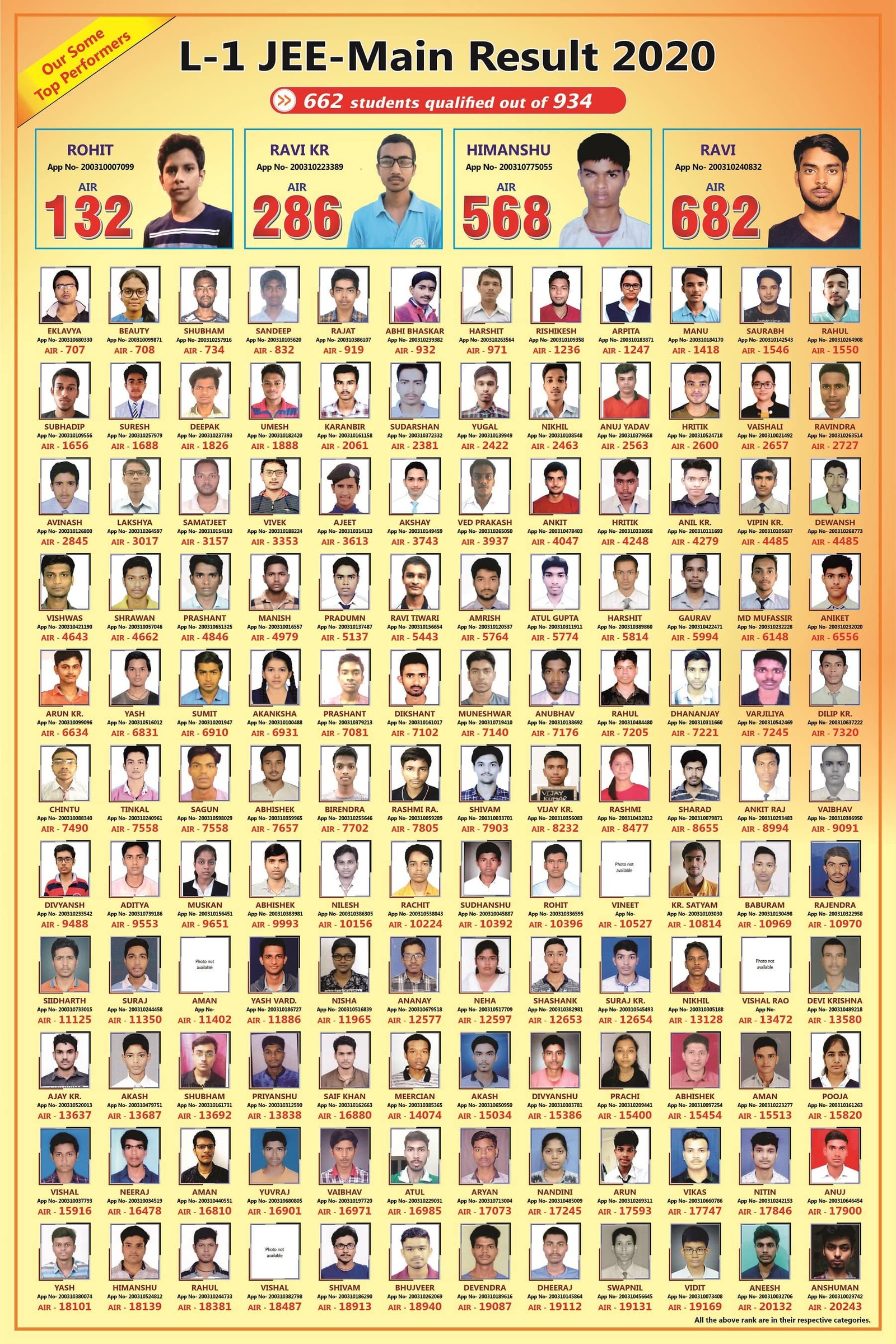
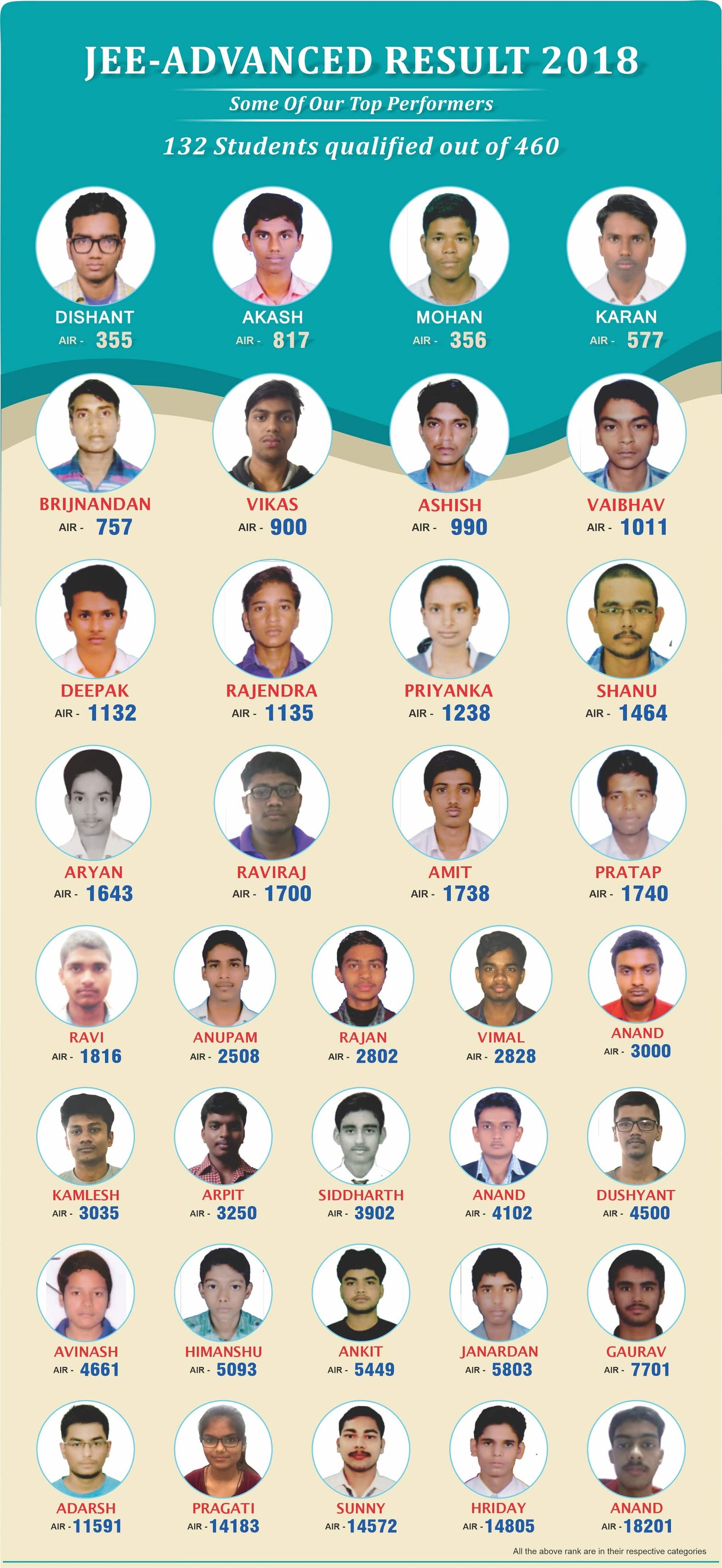
Many students from Varanasi and eastern Uttar Pradesh head to Durgakund for JEE preparation, and L-1 Coaching has been training IIT and NEET aspirants there since 2005. The institute was founded by Er. Brijesh Singh, Er. Deepak Jaju and Er. Nagendra Singh, all IIT-BHU alumni, together with Dr. Arun (IMS, BHU). If you want structured guidance, a regular test series and doubt-clearing sessions for the days that remain before JEE Main 2027, the details below may help. Please ask at the centre or on the phone about current batch availability and the admission process.
The Durgakund Centre and Courses
L-1 Coaching offers a Pre-Foundation course for Classes 8 to 10, a Foundation course for Classes 11 and 12, and a Target batch for Class 12 pass-outs and droppers. There is also the L-1 All India Test Series, with tests at JEE Main and Advanced level. Classes run with facilities such as AC classrooms, smart classes and a library. Which batch suits you best is decided after assessing your current level.
Scholarship Test and Super-40
To support students financially, L-1 conducts a merit-based scholarship test, and the result can bring a concession in fees. There is also the Super-40 talent hunt exam, where selected students are said to receive free coaching, lodging and food. For eligibility, dates and registration, please see the scholarship and Super-40 pages on the institute’s website.
Address and Contact
L-1 Coaching is at B-36/43-46M, Brahmanand Colony, Durgakund, Tulsi Manas Mandir Colony, Naria, Varanasi, Uttar Pradesh 221005. For free counselling or batch details, call 063909 05111 or apply online on the website. You will find more on our page for IIT-JEE coaching in Durgakund, Varanasi. Visiting the centre, watching a class and talking to the teachers is the best way to decide, so that you choose with full confidence.
Conclusion: The Next 60 Days Are in Your Hands
There is very little time left for JEE Main 2027, but not so little that a good plan cannot change the outcome. You have the dates, the pattern is clear and you now have a 60-day framework. All you need to do now is one thing: fix your diagnostic test today and begin Day 1 on 21 November. Review your progress every week, learn from your mock tests and look after your health before the exam. If you are in Varanasi and want guidance, you can visit the L-1 Coaching centre in Durgakund for counselling. Best wishes for your preparation.
Frequently Asked Questions About JEE Main 2027
Students and parents have many questions about JEE Main 2027: when the exam is, how many attempts are allowed, how negative marking works and what can be done in 60 days. Below are the questions asked most often, each answered briefly using the latest NTA information. Dates or rules can change, so always confirm the final details on jeemain.nta.nic.in. If your question is not listed here, you are welcome to call us and ask.
When Is JEE Main 2027 Session 1?
Session 1 will be held on 20, 21, 22, 23, 24 and 28 January 2027. These dates come from NTA’s revised calendar of 26 October 2026, which replaced the earlier 22 to 30 January dates. Session 2 will be held from 2 to 7 April 2027. Your own date and shift will be printed on your admit card.
What Is the Last Date to Apply for JEE Main 2027?
Session 1 applications opened on 24 October 2026, and the last date is 22 November 2026 at 11:50 PM. The fee must be paid by the same time. Session 2 applications will run from 5 January to 3 February 2027. Fill in the form only on jeemain.nta.nic.in and not on any other website.
How Many Marks Is JEE Main and How Does Negative Marking Work?
Paper 1 (B.E./B.Tech) is for 300 marks, with 75 questions in three hours. A correct answer gives 4 marks, a wrong answer takes away 1 mark and an unattempted question gets nothing. Reports say this applies to numerical questions as well, but confirm it in the Information Bulletin.
Can You Prepare for JEE Main in 60 Days?
If you have already studied the Class 11 and 12 syllabus, 60 days are enough for revision, practice and mock tests. Learning the whole syllabus from zero in 60 days is hard. In that case, focus on the chapters with higher marks and keep Session 2 in your plan. Effort matters, but the right direction matters just as much.
How Many Attempts Do You Get for JEE Main 2027?
A student can appear for JEE Main for three consecutive years, and with two sessions each year that is a maximum of six attempts. For 2027, candidates who passed Class 12 in 2025 or 2026, or who are appearing in 2027, are eligible. To count your remaining attempts, check the list of eligible years in the Information Bulletin.
Is NCERT Enough for JEE Main 2027?
NCERT is essential but not enough on its own. It covers the core concepts well, and Inorganic Chemistry questions often come straight from NCERT lines. For Physics and Maths, you also need problem-solving practice from previous year papers and a good practice book. Use NCERT to build concepts, then practise harder questions.
What Is a JEE Main Percentile and How Is It Different from Marks?
JEE Main results are shown as an NTA score, which is a percentile from 0 to 100. It tells you the share of candidates in the exam who scored at or below you, after scores from different shifts are normalised. Ranks are made from these scores, so track your percentile, not just raw marks.
Is JEE Main 2027 Online or Offline?
Paper 1 (B.E./B.Tech) of JEE Main 2027 is a computer-based test, so you answer on a screen at an exam centre. The B.Arch drawing test in Paper 2A is evaluated separately. Practise on a computer in your mocks, because reading on screen and marking questions for review feels different from paper.
Should I Skip Session 1 and Appear Only in Session 2?
Skipping Session 1 is usually not wise. It gives you real exam experience and a score to build on, and you can still improve in April. Since your better result can count, a weaker Session 1 costs little, while skipping it removes your safety net. Skip it only if you are truly unprepared.
Can You Crack JEE Main 2027 with Self-Study?
Yes, many students do, but it needs discipline. You need a fixed timetable, one or two trusted books, regular mock tests and honest analysis. Self-study works best when you already know the syllabus. Where students struggle alone is clearing doubts quickly, so keep a teacher or a doubt-solving group within reach.